
Key Insight: Building an Enterprise AI Knowledge Base is the shift from “storing documents” to “managing intelligence.” By leveraging Retrieval-Augmented Generation (RAG), organizations can reclaim the 9.3 hours per week employees waste searching for information, resulting in a 3X ROI through reduced operational drag and faster decision-making.
Direct Answer: To build an Enterprise AI Knowledge Base, organizations must centralize fragmented data, implement Vector Indexing for semantic search, and establish a Human-in-the-Loop (HITL) governance model. This creates a “Single Source of Truth” that understands user intent, provides cited answers, and integrates directly into workflows like Slack, Teams, and ERPs.
Why Do Traditional Wikis Fail in the Modern Workplace?
Traditional knowledge management is where information goes to die. Between static folders and keyword-dependent search engines, finding a simple answer feels like digital archaeology. Employees end up duplicating folders with different accesses, storing old, unreliable data, and missing information because nobody knows the exact location of any information.
BHyve transforms this stagnant data into a living, breathing ecosystem by addressing the three biggest drains on your bottom line:
1. The “Search Tax”
The average employee spends 20% of their workweek which is nearly two hours every single day simply hunting for information. That isn’t just a workflow hiccup; it’s a massive hidden tax on your payroll.
- The BHyve Fix: Instead of digging through folders, BHyve delivers the exact answer in seconds, giving your team their Fridays back.
2. The Silo Syndrome
Your best insights are currently trapped in “dark data”; private email chains, buried chat threads, and disconnected personal drives. Each department has its own folder, and cross functional data is sitting as multiple copies in multiple folders. When data is siloed, the right hand never knows what the left is doing.
- The BHyve Fix: BHyve acts as the connective tissue across your organization, surfacing critical insights regardless of where they were originally “hidden.”
3. The “Key Holder” Crisis
Most organizations rely on a handful of veteran experts who carry the company’s entire history in their heads. This creates a single point of failure: when those experts leave, their knowledge walks out the door with them.
- The BHyve Fix: BHyve institutionalizes expertise. It captures the “how” and “why” of your top performers, ensuring that your company’s collective intelligence stays within the company permanently.
What are the Core Features of a High-Impact AI Knowledge Base?
An AI-powered hub does more than store files; it processes them to provide context-aware assistance.
- Semantic Search & Intent Recognition: AI understands what you mean, not just the words you use. Searching “onboarding” retrieves the specific checklist, not every document containing the word.
- Automated Metadata & Tagging: AI classifies content and adds metadata automatically, eliminating the manual labor of organization.
- Cross-Platform Integration: The knowledge base lives inside your existing tools like Slack, Microsoft Teams, and CRMs bringing answers to where work happens.
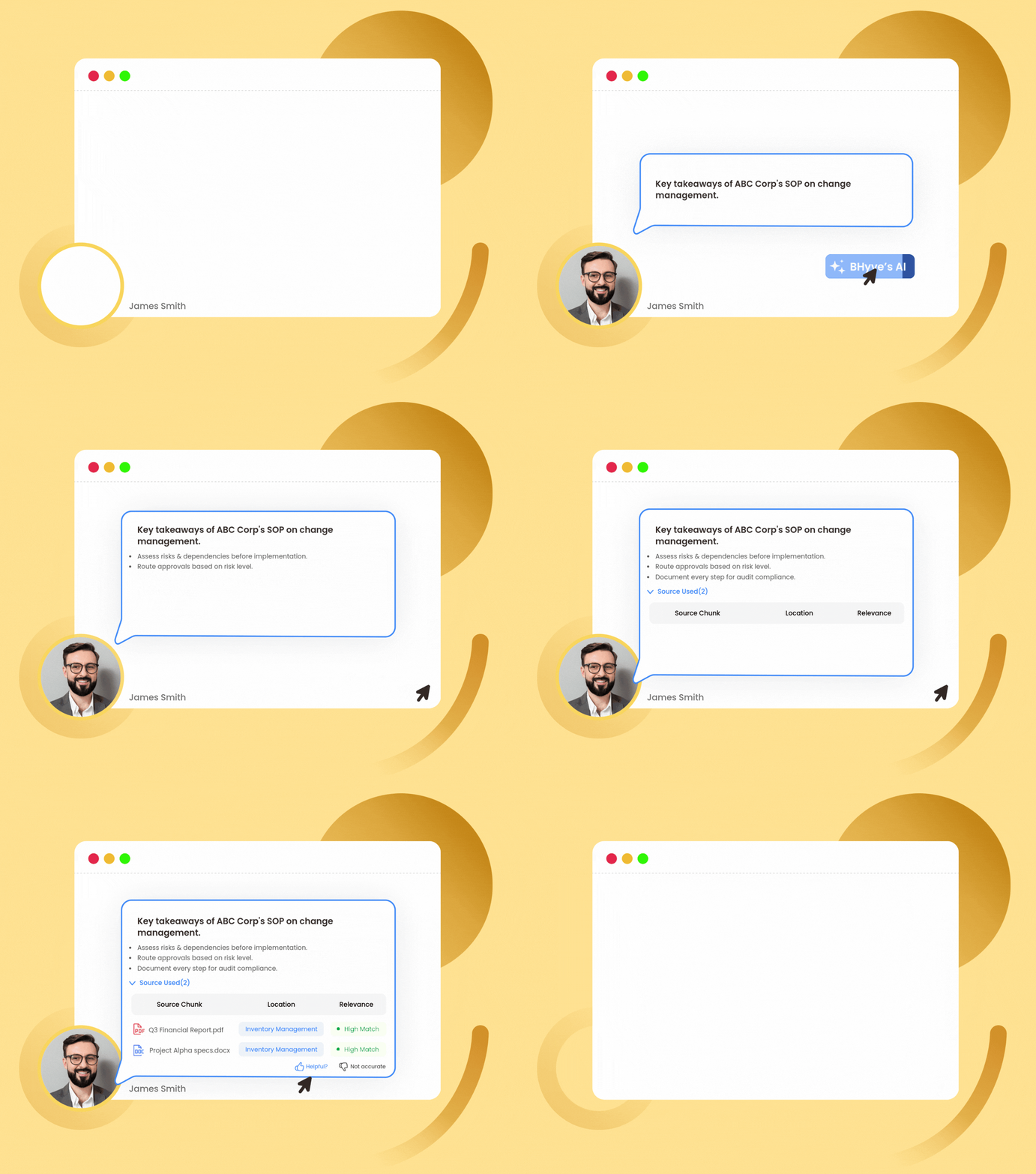
- Generative Answer Engine: Instead of a list of links, the AI provides a summarized, cited answer based on your “Golden Sources.”
What are the 5 Steps to Building an AI Knowledge Base?
Follow this technical roadmap to ensure your AI Knowledge Base is scalable and secure.
Step 1: Identify and Prioritize Critical Knowledge Areas Audit your departments to find the highest-friction areas usually Employee Onboarding, Troubleshooting Guides, and Compliance Policies.
Step 2: Select a RAG-Ready Technology Partner Choose a platform like BHyve that offers Retrieval-Augmented Generation (RAG). This ensures the AI’s answers are grounded in your verified files, effectively eliminating hallucinations.
Step 3: Migrate and Structure Existing Data Gather data from Google Drive, SharePoint, and Wikis. Use the AI to automatically de-duplicate files and structure them into Knowledge Graphs for better retrieval.
Step 4: Implement Human-in-the-Loop Governance Establish clear rules for authorship. While AI drafts content, human experts must verify “high-stakes” information (like safety protocols) for 100% accuracy.
Step 5: Continuously Optimize via Analytics Analyze “search-without-result” logs to identify content gaps. Use AI to flag outdated materials for review every 90 days.
The BHyve Advantage
BHyve serves as the connective tissue for this roadmap, transforming static documentation into a dynamic, “living” brain for your organization. By leveraging advanced RAG architecture, BHyve doesn’t just store information; it understands context and intent, ensuring employees receive precise, cited answers rather than a list of links. Its seamless integration with existing tech stacks allows for rapid deployment without disrupting current workflows, while built-in governance tools empower subject matter experts to maintain high-fidelity data with minimal effort.
Case Study: Honeywell’s 40% Reduction in Troubleshooting Time
Industrial giant Honeywell faced the challenge of managing technical expertise across global business units.
- The Solution: They adopted an AI-powered internal hub that intelligently retrieved service records and best practices for field technicians.
- The Results:
- 40% Reduction in troubleshooting time for field engineers.
- Accelerated Onboarding: Training time for new technicians dropped significantly via AI-recommended learning paths.
- Retention of Institutional Knowledge: Reduced reliance on senior staff by democratizing access to historical issue resolutions.
Frequently Asked Questions (FAQ)
Q: How does an AI Knowledge Base differ from a Document Management System (DMS)? A: A DMS stores files; an AI KB understands them. An AI KB uses Natural Language Processing (NLP) to provide conversational answers derived from those files, rather than just returning a list of links.
Q: Is our proprietary data used to train public AI models? A: No. Enterprise solutions like BHyve follow a “read-only” query mode. Your data is indexed in a private vector store and is never used to train public LLMs.
Q: How do we measure the ROI of a Knowledge Base? A: ROI is measured by the reduction in Mean Time to Knowledge (TTK), lower ticket volumes in internal support, and the recovery of the 9.3 hours per week lost to manual searching.
Ready to turn your organization’s data into a strategic competitive advantage? Book a demo with BHyve today to see how we help teams centralize knowledge and boost enterprise-wide success.